Buy majorca.net ?
We are moving the project
majorca.net .
Are you interested in purchasing the domain
majorca.net ?
domain@kv-gmbh.de · 0541-91531010
Buy majorca.net ?
Is it "le présent texte" or "le texte présent"?
The correct phrase is "le texte présent." In French, adjectives generally come after the noun they modify, so "présent" should come after "texte." Therefore, the correct phrase is "le texte présent." **
Does it say "le présent texte" or "le texte présent"?
It says "le présent texte." **


Similar search terms for Présent
Top-Angebote
Products related to Présent:
-
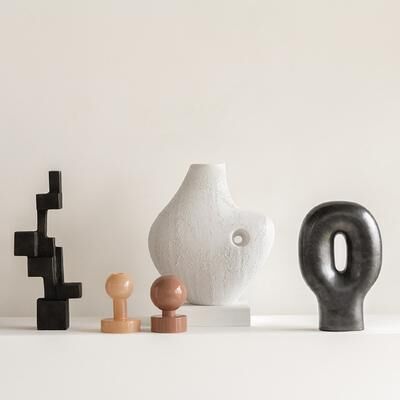
Urban Nature Culture Vase Ace - AceSetting forth a tradition that is centuries old, pottery has ever been one of Portugal's trades. Urban Nature Culture loves to work with Portuguese artisans - who use their skills to combine modern looks and contemporary design with techniques of old.145,60 $*Shipping: 0,00 $Secure redirect to the provider



-
How is the Subjonctif Présent used in French?
The Subjonctif Présent is used in French to express doubt, uncertainty, desire, necessity, or emotion. It is often used after certain verbs and expressions that indicate these feelings, such as "vouloir que" (to want that), "il est important que" (it is important that), or "il faut que" (it is necessary that). The Subjonctif Présent is conjugated differently from other verb tenses and has specific endings for each subject pronoun. It is important to pay attention to the context in which the Subjonctif Présent is used to understand its meaning and usage. **
-
What is the difference between Imparfait and Conditionnel présent?
The Imparfait is used to describe ongoing or repeated actions in the past, while the Conditionnel présent is used to express hypothetical or uncertain actions in the present or future. The Imparfait is used to set the scene or provide background information, while the Conditionnel présent is used to express a condition or consequence. Additionally, the Imparfait is formed by adding specific endings to the root of the verb, while the Conditionnel présent is formed by adding specific endings to the infinitive form of the verb. **
-
How do you distinguish between the Imparfait, the Conditionnel Présent, and the Futur Simple in French?
In French, the Imparfait is used to describe ongoing or repeated actions in the past, while the Conditionnel Présent is used to express hypothetical or uncertain actions in the present or future. The Futur Simple, on the other hand, is used to talk about actions that will happen in the future. To distinguish between them, pay attention to the context of the sentence and the time frame being referred to. The Imparfait will typically be used for past actions, the Conditionnel Présent for hypothetical situations, and the Futur Simple for future events. **
-
Is man a creature of nature or culture, or is culture the nature of man?
Man is a complex being influenced by both nature and culture. While humans are inherently part of the natural world, our behaviors, beliefs, and practices are largely shaped by the societies we live in. Culture can be seen as the nature of man in the sense that it is a fundamental aspect of human existence, shaping our identities and interactions with the world. Ultimately, the relationship between nature and culture is intertwined in shaping the essence of humanity. **
Is man a being of nature or culture, or is culture the nature of man?
Man is a being of both nature and culture. While humans are inherently a part of the natural world, our ability to create and participate in culture sets us apart from other species. Culture shapes our beliefs, behaviors, and interactions with the world, becoming an essential part of our identity. Therefore, culture can be seen as the nature of man, as it influences and defines our existence in profound ways. **
Is culture a form of nature?
Culture is not a form of nature, but rather a product of human society. While culture can be influenced by nature and the environment, it is distinct in that it is created, shared, and passed down through generations by humans. Nature refers to the physical world and natural phenomena, while culture encompasses the beliefs, customs, arts, and social behaviors of a particular group of people. **
Top-Angebote
Products related to Présent:
-
Urban Nature Culture Vase RelaxedQuiet elegancy comes to life in Urban Nature Culture's vase Relaxed. Handmade in Portugal, this ceramic vase has a shape beyond anything you've seen - it's organic, it flows and steals your heart with its playful ear.123,40 $*Shipping: 0,00 $Secure redirect to the provider
-
Is it "le présent texte" or "le texte présent"?
The correct phrase is "le texte présent." In French, adjectives generally come after the noun they modify, so "présent" should come after "texte." Therefore, the correct phrase is "le texte présent." **
-
Does it say "le présent texte" or "le texte présent"?
It says "le présent texte." **
-
How is the Subjonctif Présent used in French?
The Subjonctif Présent is used in French to express doubt, uncertainty, desire, necessity, or emotion. It is often used after certain verbs and expressions that indicate these feelings, such as "vouloir que" (to want that), "il est important que" (it is important that), or "il faut que" (it is necessary that). The Subjonctif Présent is conjugated differently from other verb tenses and has specific endings for each subject pronoun. It is important to pay attention to the context in which the Subjonctif Présent is used to understand its meaning and usage. **
-
What is the difference between Imparfait and Conditionnel présent?
The Imparfait is used to describe ongoing or repeated actions in the past, while the Conditionnel présent is used to express hypothetical or uncertain actions in the present or future. The Imparfait is used to set the scene or provide background information, while the Conditionnel présent is used to express a condition or consequence. Additionally, the Imparfait is formed by adding specific endings to the root of the verb, while the Conditionnel présent is formed by adding specific endings to the infinitive form of the verb. **
Similar search terms for Présent
-
Urban Nature Culture Vase Ace - AceSetting forth a tradition that is centuries old, pottery has ever been one of Portugal's trades. Urban Nature Culture loves to work with Portuguese artisans - who use their skills to combine modern looks and contemporary design with techniques of old.145,60 $*Shipping: 0,00 $Secure redirect to the provider
-
Urban Nature Culture Vase Talvi - WhiteFloating the sea waves, a sense of calm takes over, feeling at home in the world. That same feeling we get at home, like a safe haven to relax our senses and feast our eyes on our most cherished things.267,80 $*Shipping: 0,00 $Secure redirect to the provider
-
How do you distinguish between the Imparfait, the Conditionnel Présent, and the Futur Simple in French?
In French, the Imparfait is used to describe ongoing or repeated actions in the past, while the Conditionnel Présent is used to express hypothetical or uncertain actions in the present or future. The Futur Simple, on the other hand, is used to talk about actions that will happen in the future. To distinguish between them, pay attention to the context of the sentence and the time frame being referred to. The Imparfait will typically be used for past actions, the Conditionnel Présent for hypothetical situations, and the Futur Simple for future events. **
-
Is man a creature of nature or culture, or is culture the nature of man?
Man is a complex being influenced by both nature and culture. While humans are inherently part of the natural world, our behaviors, beliefs, and practices are largely shaped by the societies we live in. Culture can be seen as the nature of man in the sense that it is a fundamental aspect of human existence, shaping our identities and interactions with the world. Ultimately, the relationship between nature and culture is intertwined in shaping the essence of humanity. **
-
Is man a being of nature or culture, or is culture the nature of man?
Man is a being of both nature and culture. While humans are inherently a part of the natural world, our ability to create and participate in culture sets us apart from other species. Culture shapes our beliefs, behaviors, and interactions with the world, becoming an essential part of our identity. Therefore, culture can be seen as the nature of man, as it influences and defines our existence in profound ways. **
-
Is culture a form of nature?
Culture is not a form of nature, but rather a product of human society. While culture can be influenced by nature and the environment, it is distinct in that it is created, shared, and passed down through generations by humans. Nature refers to the physical world and natural phenomena, while culture encompasses the beliefs, customs, arts, and social behaviors of a particular group of people. **
* All prices are inclusive of VAT and, if applicable, plus shipping costs. The offer information is based on the details provided by the respective shop and is updated through automated processes. Real-time updates do not occur, so deviations can occur in individual cases. ** Note: Parts of this content were created by AI.